
The Forgotten Torre de la Plata in Seville
The Torre de la Plata, one of Seville’s lesser-known treasures, has a fascinating history. Its irregular octagonal plan hides more than meets the eye. For a long time it was thought to have just two storeys: a ground floor and an upper floor leading to a roof enclosed by a battlemented parapet. Restoration revealed a third, hidden space at its base, used as a cistern to collect water—another intriguing detail of this historic place.
The lower storey follows the tower’s octagonal shape and is covered by an impressive rib vault, an example of early Gothic style. Eight ribs rest on simple pilasters and meet at a polygonal centre. It is remarkable to imagine the skill involved in building it centuries ago.
Although the original staircase connecting the lower and upper floors has collapsed, the upper levels can be reached through a house attached to the tower. Another rib vault survives upstairs, reinforced with iron tie rods attached to an iron ring that also projects outside. Here the original staircase remains: two flights supported against the tower walls lead to a roof that must once have offered extraordinary views of Seville.
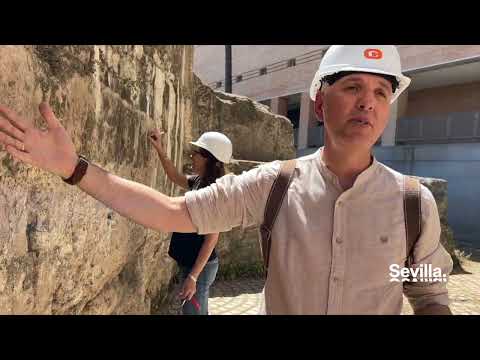
The exterior still bears traces of its history. At the top are the remains of battlements, now filled in. The walls were originally coated in white plaster, giving the tower the bright appearance behind its name, “Silver Tower”. It formed part of the defences linking the Torre del Oro with Seville’s surrounding walls through a coracha, a fortified passage connecting the towers. A section of wall linking the Torre de la Plata with the Casa de la Moneda remains visible.
The tower’s story is not only about defence and warfare. The houses attached to it on Calle Santander are fine examples of Italian Renaissance influence in Seville. Designed by architect Vermondo Resta in the early 17th century, they reflect a period when the city looked to Europe for artistic inspiration.

Although some theories attributed Roman origins to the surrounding wall, archaeological research instead points to construction by the Almoravids around 1125, followed by alterations in the Almohad period. Around 1220, the Torre del Oro and the wall linking the towers were built.
As Seville’s walls lost their defensive role, they adapted to new uses. From the 16th century, houses and warehouses surrounded the Torre de la Plata, reducing its prominence. It was almost forgotten, hidden among later buildings. After centuries of change, restoration has brought renewed attention to the tower and questions about its future.
Once vital to Seville’s defences, the Torre de la Plata waits to be rediscovered and to return a piece of the city’s history to us. What further secrets might it reveal in years to come?
Have you visited our Seville souvenir shop?
Find more old photographs of Seville in our Facebook group.
Seville in Two Days: Walking Itinerary and Map

Seville’s Royal Alcázar: History, Architecture and Legends
Churches to Visit in Seville

The General Archive of the Indies: Seville’s Historical Treasure
A Virtual Walk Around Seville Cathedral

Santa Cruz’s Most Beautiful Streets in Seville: Walking Route and Map
