

Vicente “el del Canasto”: A Character Seville Never Forgot
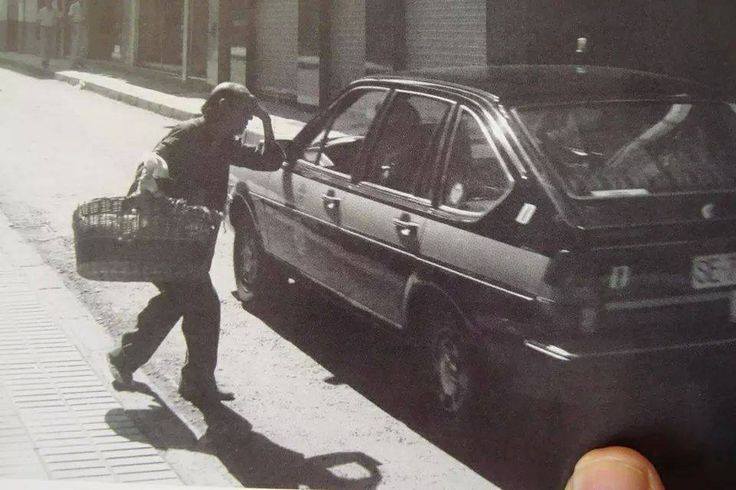
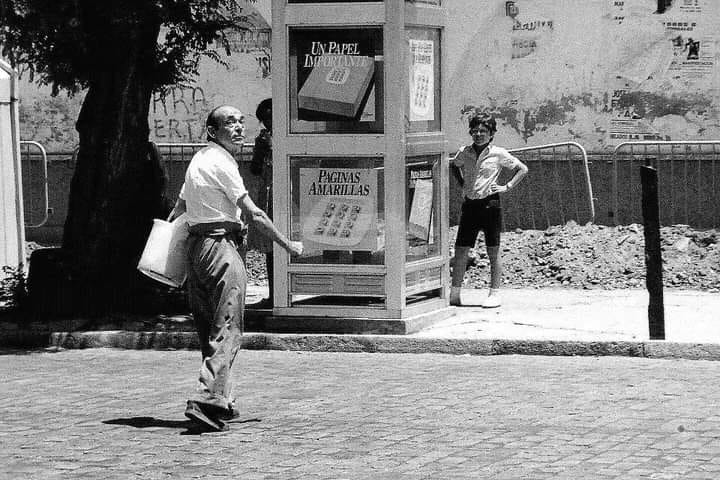
If you walked through Seville in the 1980s, you might encounter an unmistakable figure: not particularly tall, somewhat gangly, carrying a basket on his arm, with a distant gaze, his right hand shading his eyes and a constant murmur. He was Vicente Moreno Orosco, known as Vicente “el del Canasto”—“Vicente with the Basket”—one of those people who, without intending to, became part of an entire city’s collective memory.
This article brings together memories of a local character, rather than a fully documented biography. Anecdotes should not be treated as verified medical or personal facts. To see the Seville associated with these memories, explore our historical photographs or discover other lesser-known corners of the city.
Who Was Vicente “el del Canasto”?
Local memories associate Vicente with porter work at the Encarnación Market, where his basket helped him carry purchases. Accounts of his private life differ; without documentary evidence, this article does not establish the cause of changes in his circumstances.
He became a familiar figure in central Seville. Always carrying his basket, he wandered along Paseo de Colón, Triana Bridge, Reyes Católicos, Plaza Nueva and Tetuán. Vicente seemed to be everywhere. People remember him as gentle rather than aggressive. Before taking to the streets, he had also worked delivering goods for a bearings company. Older residents affectionately called him a “loco bueno”, a kindly eccentric.
An Urban Legend with a Voice of His Own
His speech was as chaotic as it was compelling. Sometimes he seemed to repeat religious litanies; at other times he uttered phrases that sounded comic or prophetic. The Pope, Franco, Christ and Saint James all appeared in a verbal whirlwind that puzzled and fascinated listeners. The article jokes that Joaquín did not invent the feint and sprint—Vicente did, recalling stories of him looking into cars while searching for his wife.
His basket was more than a working tool: a symbol, a shield and perhaps a suit of armour. Nobody took it away and he never let it go. Years later, Seville residents might still say of somebody behaving strangely: “¡Estás como Vicente el del Canasto!”—“You’re like Vicente with the Basket!”
A City That Watched Over Him
Everybody knew Vicente: traders, neighbours, police officers, priests, shoeshiners and even children, who watched with a mixture of uncertainty and curiosity. Many people gave him food. Local stories say he lived in a shack beneath Triana Bridge, in the area once known as Capote.
He did not trouble, steal from or hurt people. He simply existed in his own way, like an unexpected note in the familiar score of Seville’s daily life.
The End of a Symbol
Accounts of his death differ: some say a car struck him, others speak of a hospital or care home. What endures is Vicente’s place in Seville’s imagination. He is one of those figures whose memory belongs to the whole city rather than an official biography. His words touched on justice, religion, the end of the world and an order that seemed to make sense to him alone.
A Seville Don Quixote: No Statue, but a Story
He has no statue, but perhaps he does not need one. Vicente was among the distinctive characters Seville took into its heart, becoming part of its identity alongside Silvio, El Pali and the accordion player. Their seemingly outlandish words sometimes hid uncomfortable truths.
Vicente “el del Canasto” was more than an eccentric. He became a distorted mirror in which Seville saw itself, through laughter, respect and bewilderment. He no longer walks through the Encarnación or murmurs beneath his basket, but his memory remains. Seville remembers its own, especially those who left a mark without trying.
If you enjoyed this story and want more, read about Cervantes’s connections with Seville.


