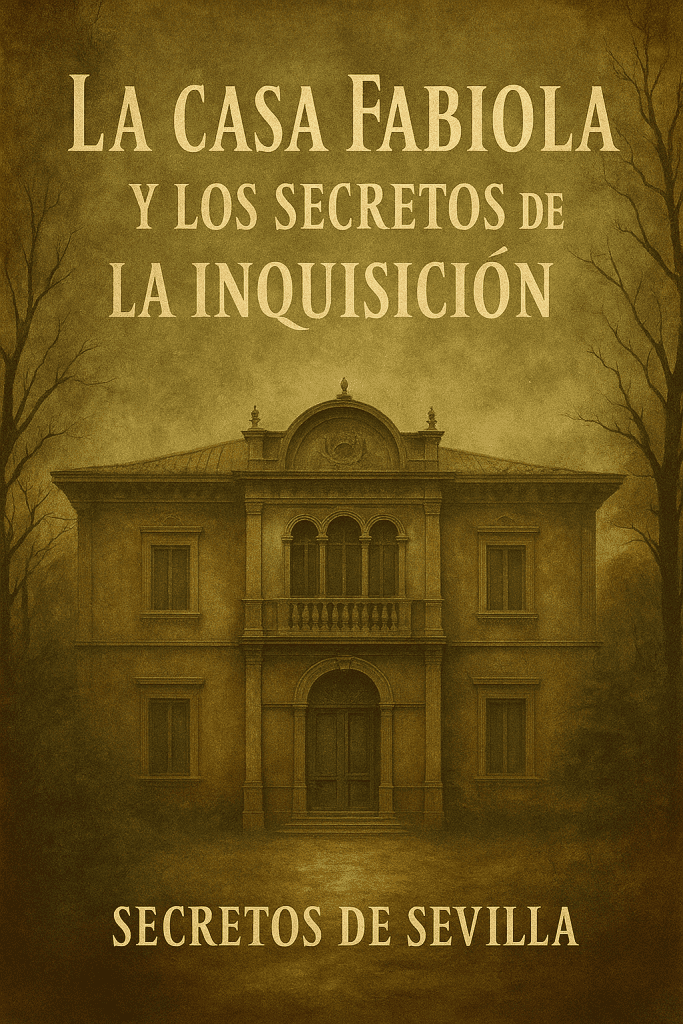
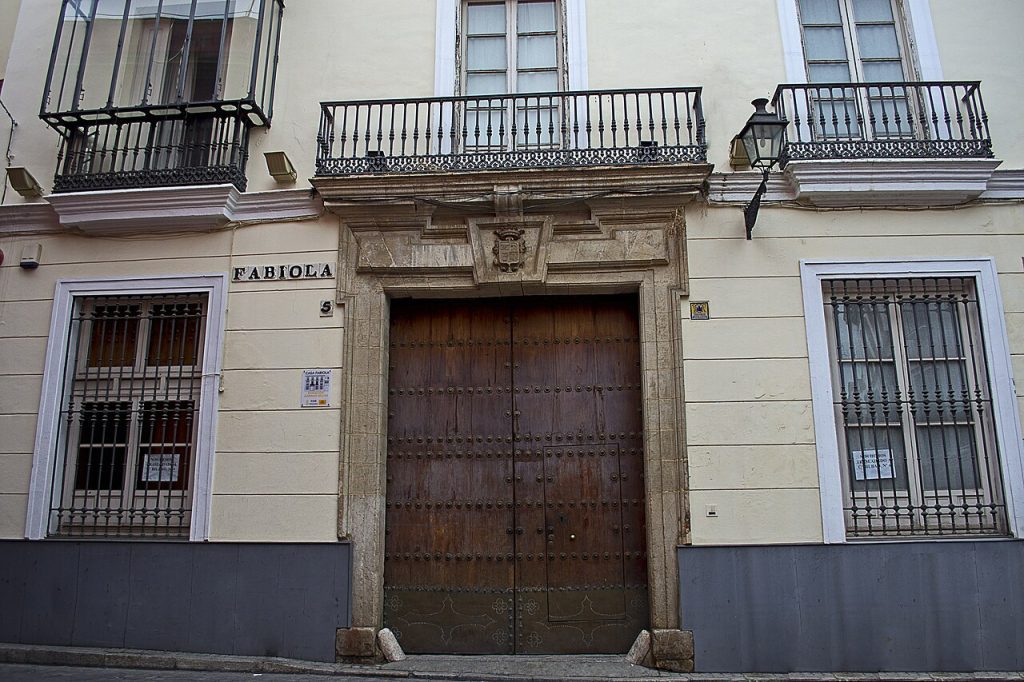
Casa Fabiola and the Secrets of the Inquisition
In this tale, Casa Fabiola, tucked among dignified streets and respectable names in Seville’s old town, did not begin as a mansion. It began as a trap: a beautifully decorated box built to contain something that must never escape.
To twenty-first-century eyes, it is a museum. To the story’s seventeenth-century eyes, it is a motionless animal: a stone monster swallowing people and secrets. It has not finished digesting them.
Visitors admire it with the politeness reserved for old, restored buildings. Children, however, sense something. Some cling to their mothers and refuse to see the paintings. Somebody on the staircase is watching, they say, though nobody is there.
In this story, they are right.
I. The Sister and the Alchemist
The house’s first owner in the tale is a spice merchant with a sister who never speaks. Whether from birth or divine intention, nobody knows. Her eyes resemble wet coal and her laugh frightens the servants. Each night, her brother shuts himself in a basement room and mixes potions and remedies—or so he says. Neighbours swear they hear souls arguing in dead languages behind the walls.
One night she descends to the basement, dressed in white, carrying a candlestick and a black cat. She never returns. The merchant says she fled. Even now, the story claims, cats will not enter that part of the museum.
II. Forty Days of Fire
During the Inquisition, the house changes hands. A nobleman with an unpronounceable surname buys it unseen, like somebody accepting a debt to the Devil without reading the small print.
He is neither the first nor the last.
His name is Don Matías de Zarzalejo, a minor inquisitor and major zealot, feared for his hollow voice and skull-handled cane. The tale’s supposed records say he lives there for forty days, during which nobody else is seen entering or leaving.
On day forty, three men emerge. One vomits blood. Another cannot stop laughing. The third has no eyes. Don Matías never leaves. Yet the legend says his shadow appears in the rear courtyard each Saint John’s Eve, at the exact hour of the Angelus.
III. The Invisible Room
In the tale, builders renovating the house find a handleless door behind a panel. Inside lies a three-metre-square room, without windows or air, its walls lined with hand-stitched leather.
Nobody asks which animal supplied the leather.
Nobody wants the answer.
The restorers seal the room, paint over it and place an art display and security light in front.
From time to time, the movement sensor triggers by itself. A recording of screams begins—one the museum supposedly insists it never installed.
IV. Those Echoes Are Not the Schoolchildren
The past is not the most unsettling part.
The present is.
Teachers in the story report that audio guides distort in the west wing. Speakers utter lines absent from the programme:
“Look into my eyes.”
“Where did you hide the keys?”
“I have not finished with you.”
Technicians inspect, reset and replace the devices.
The voices return.
Once, a pupil is left alone in the portrait room. An hour later they find him in the bathroom, hugging himself, silent and staring. He never speaks about the outing again.
V. Not a House. A Scar.
Older Seville residents in the tale refuse to enter. Taxi drivers will not stop outside. A Santa Cruz priest swears he will not bless that pavement, even on the Pope’s orders.
Yet the museum in the story remains open. Admission is free. The paintings are perfectly lit, the floors gleaming, the air scented. Everything promises comfort.
Except the basement.
That remains sealed.
Or so they say.
What about you?
Would you enter alone?
Walk the central corridor at three in the afternoon, the story’s hour of the condemned?
Stare at inquisitor Matías’s portrait, knowing it sometimes blinks?
Casa Fabiola, in this dark fantasy, is no museum. It is a pact.
Once you hear its story, silence no longer belongs to you.
Bécquer has something to tell you.
Follow us on social media.