The Manzanilla That Makes Visitors Speak in Tongues
Old Ramón “the Porter” told it in a voice roughened by too many fairs and too little rest. At tent number seven—the San Ginés brotherhood’s caseta, where people sing more than they eat—something happened that only Seville could accept with its everyday tolerance for miracles.
It was Wednesday night. The moon hung like a crooked earring above the yellow sand, and the flounces had not yet creased. The April Fair was in full swing. Manzanilla, flamenco sweat and the lingering smell of fried fish drifted through the air. Then they arrived.
Three visitors from abroad. No flip-flops-and-selfie tourists: these wore linen jackets, spoke polished English and watched the flamenco scene with fascination. One was Swedish, another Japanese. Nobody remembered whether the third was Greek or Canadian, but he spoke little and looked as though he had read too many books.
They ordered manzanilla. Ramón poured it with the solemnity of someone offering a bottled secret. One small glass, then another. At the third, the impossible happened.
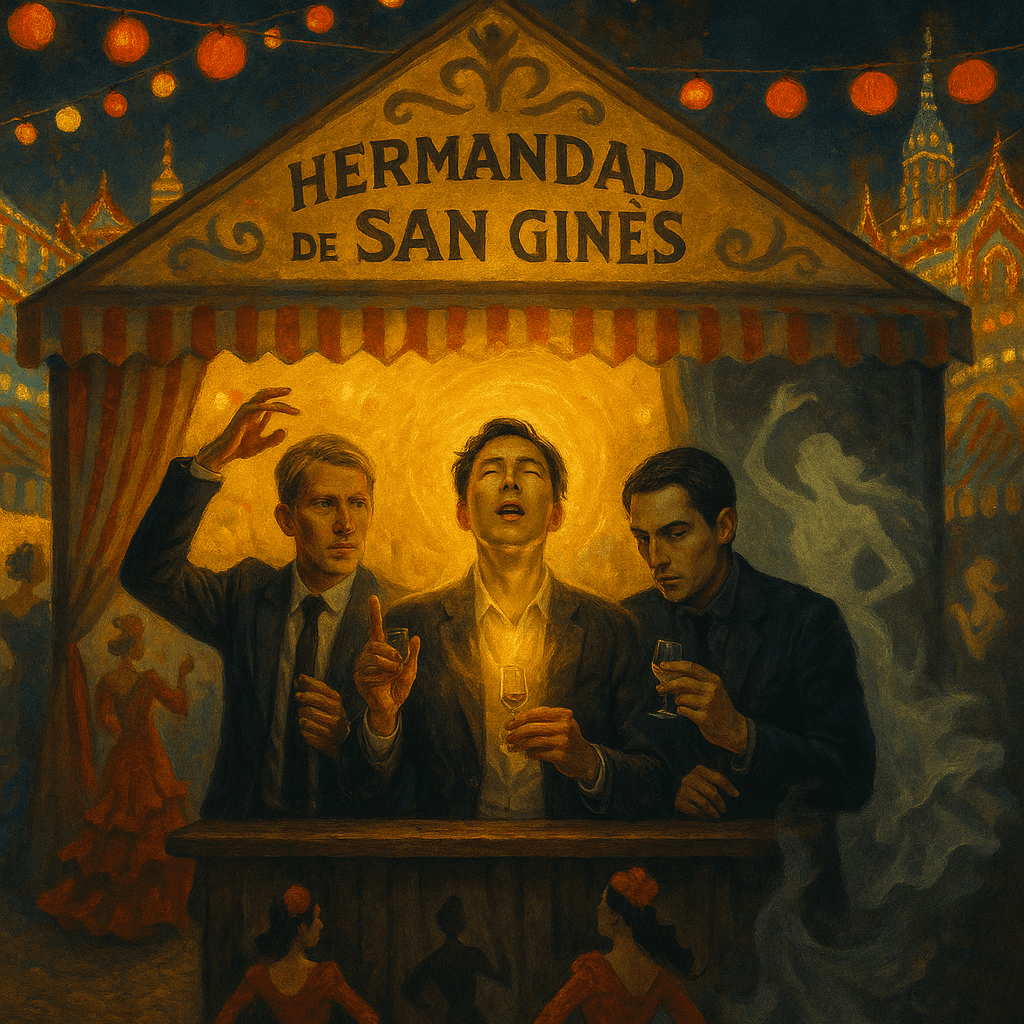
The Japanese visitor, previously nodding politely, stood with his eyes rolled back and launched into a saeta with a voice from beyond the grave and perfectly timed clapping. Half the tent rose to its feet. His accent sounded strange yet flawless. When he finished, he fainted among the lanterns.
The Swedish visitor followed. He stepped onto the stage with military precision and delivered a flamenco verse in ancient Hebrew, quoting Exodus with a flair that even Triana’s oldest resident might envy.
The third murmured in a language nobody recognised. A passing retired priest swore it was Aramaic, the language of the Messiah. “That lad has prayed aloud what only Heaven should hear,” he said, crossing himself and ordering another round.
The incident spread through the fairground like fireworks in an unattended display. Some called it possession, others an alcoholic miracle, and the drunkest imagined a secret winery connected to the divine.
Since then, says the tale, nobody has found the bottle. Some call it a lost 1729 solera. Others attribute it to a winemaker expelled from Jerez for “fermenting too much”. The waiter disappeared a week later, as though the fair had swallowed him.
Caseta seven remains in the story. Nobody mentions it, but everybody knows where it is. Each fair, a visitor or two orders a small glass and receives sideways glances of fear and hope.
If any city’s wine could open the soul and let its hidden voices speak, it would be Seville.
If any drink could summon the dead, the prophets and flamenco legend Camarón…
it would be manzanilla.
The one that sings.
The one that prays.
The one nobody serves twice.
Fancy a free walking tour?
Receive each new legend through our Facebook or Instagram channel—whichever suits you.