Seville’s Royal Alcázar: History, Architecture and Legends
Welcome! Today we enter Seville’s Royal Alcázar, a time capsule of history, art and legends. Exploring its halls and gardens is a journey through different periods and cultures, revealing stories hidden within its ancient walls.
Planning a visit? Explore tickets and experiences in Seville and check opening times and availability in advance.
The history of Seville’s Alcázar
The history of the Royal Alcázar reaches back to the early medieval period and the Islamic fortifications associated with the 10th century. After Ferdinand III’s conquest of Seville, the complex developed as a royal palace and residence for successive monarchs.
Its mixture of architectural styles reflects changing rulers and tastes. Mudéjar, Renaissance and Baroque contributions make it a living record of Seville’s history.
Repeated rebuilding and expansion show the importance, power and wealth of its inhabitants, from monarchs to senior courtiers.
Architecture and design
- The Giralda: the nearby Cathedral’s bell tower, originally a mosque minaret. It forms part of Seville’s shared monumental landscape, but is not inside the Alcázar.
- Patio de las Doncellas: an outstanding example of Mudéjar architecture, with interlacing arches and colourful tiles.
- The Baths of María de Padilla: atmospheric underground rainwater cisterns named after the woman associated with Pedro I.
The palace and its gardens evoke an earthly paradise, inviting contemplation and an enjoyment of light, water, planting and architectural detail.
Important historical events
The Royal Alcázar has witnessed events connected with the history of Spain and Europe. Its association with the Casa de la Contratación links it to navigation and the administration of voyages to the Americas.
Its halls hosted diplomatic business and royal celebrations such as Emperor Charles V’s wedding, reflecting alliances with international consequences.
Pedro I’s reign also connects the palace with the violent dynastic struggles involving his half-brother Enrique of Trastámara, later Henry II. Their conflict provides a dramatic backdrop to the building’s history.
Legends and mysteries
The Alcázar is surrounded by an atmosphere of mystery. Stories describe secret tunnels linking the palace with different parts of the city, supposedly used for escapes or clandestine meetings between lovers.
One tale, called the legend of the Alcázar’s blood in the original article, connects Pedro I and María de Padilla with a tragic love story and a spirit said to linger in its courtyards and gardens.
Stories of apparitions and unexplained phenomena also contribute to the fascination surrounding this ancient palace. These belong to its folklore rather than established historical fact.
The Alcázar in popular culture
The palace’s appeal extends into popular culture. International productions such as Game of Thrones have used it as a filming location, bringing its architecture to audiences around the world.
Writers, poets and artists have also found inspiration in its corners. The Alcázar is a cultural icon that continues to captivate visitors.
Exhibitions and concerts connect its past with the present and keep the palace part of Seville’s cultural life.
Questions about Seville’s Alcázar
Who lived in the Alcázar?
Over the centuries, the complex served rulers, governors and royal households. Successive inhabitants left their mark on its history and architecture.
Prominent monarchs, including Pedro I and the Catholic Monarchs, used the Alcázar, tying its development to the politics and culture of their time.
Which king built the Alcázar?
The palace developed over many periods. Its early fortifications predate the Christian conquest, while Pedro I’s 14th-century palace made it one of Spain’s outstanding examples of Mudéjar art.
Later monarchs, including the Catholic Monarchs and Charles V, added or altered buildings, but Pedro I’s palace remains a defining feature.
How old is Seville’s Alcázar?
The complex has origins in the 10th century and is widely described as Europe’s oldest royal palace still in use. Continual changes have created a monument with more than a thousand years of history.
What was the Alcázar originally?
It began as a fortified complex protecting Seville and developed into a royal palace and symbol of power and culture.
Today it is a historical monument and a setting for cultural and social events, keeping the legacy of its different periods alive.
Discovering the Alcázar’s history, legends and mysteries takes visitors into other eras and invites them to explore a legacy that will continue to fascinate future generations.
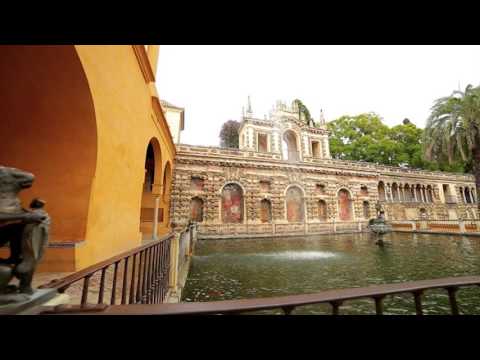
Watch the following video for a closer look at the beauty and history of Seville’s Alcázar:
Test your knowledge with our Seville history quiz.
Follow us on Instagram for more secrets! 🌳💚