
The Mistake Carved into Seville’s San Telmo Palace
The mystery of the fallen head
In Seville, even sculptures have secrets. At San Telmo Palace, one of the city’s best-known buildings, a historical mistake was literally carved in stone. Or at least it was until a head fell, revealing a forgotten story connecting French royalty, Baroque sculptors and a confusion that lasted for centuries.
It began when the Dukes of Montpensier, Antoine of Orléans and María Luisa Fernanda de Borbón, sister of Queen Isabella II, settled in Seville in 1849 and made the former seafarers’ school their residence: today’s San Telmo Palace. They brought an elegant court, a vision for their palace and, naturally, plenty of art.
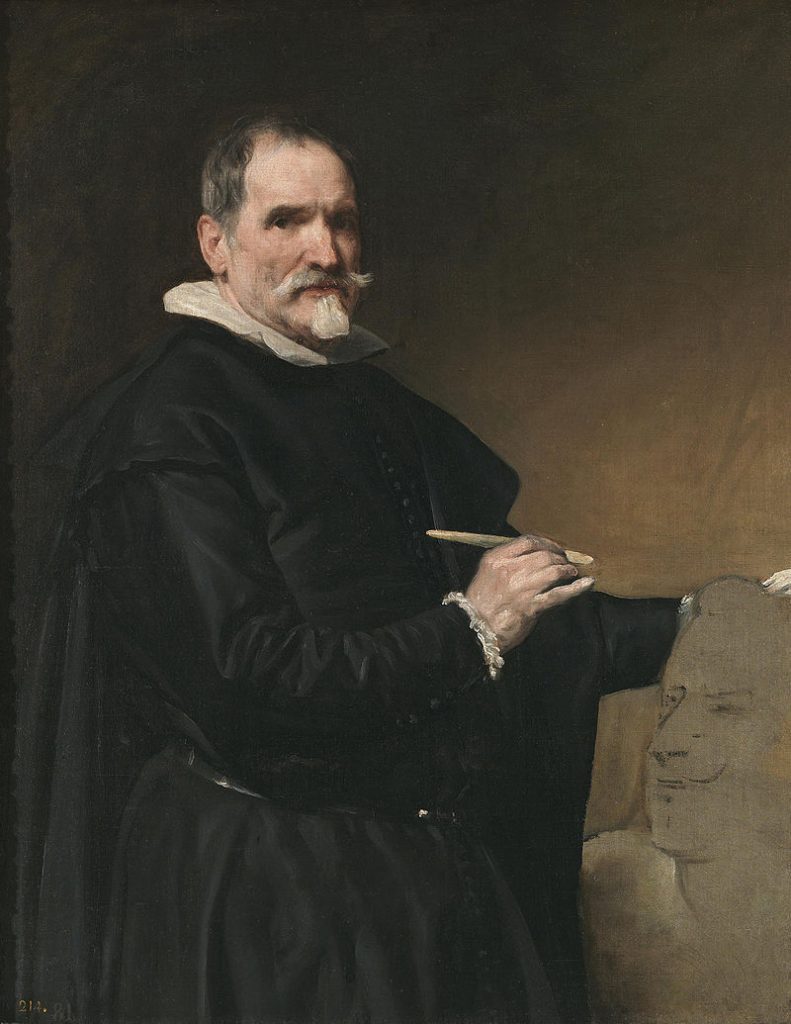
To embellish the palace, they commissioned sculptor Antonio Susillo to create twelve figures honouring notable people from Seville’s history. One stood out for its calm, solemn presence: Juan Martínez Montañés, the great sculptor of Spain’s Golden Age. But what caught the eye was the object in his hands: a representation of the face of Cristo del Gran Poder.
And that is where the confusion begins.
The Gran Poder that was not his
In the 19th century, the authorship of many religious works was uncertain. Through custom or prestige, they were attributed to the major names of Seville’s Baroque. The Gran Poder image was believed to be by Martínez Montañés, so Susillo depicted him holding it as a symbol of his legacy.
But Gran Poder was not his work. It was made by his pupil, Juan de Mesa y Velasco. The confusion endured until 1920, when researcher Heliodoro Sancho Corbacho found a document in Seville’s notarial archives showing that the Hermandad del Traspaso had commissioned Juan de Mesa directly.
So the great master Montañés holds his pupil’s most celebrated work by mistake. An elegant, almost poetic error that reminds us that even art has its lapses.
A fall with a message
In July 2024, the Montañés sculpture lost its head—literally. Deterioration and the passage of time caused damage to the figure holding the face of Gran Poder, prompting alarm and reflection. Was it coincidence, a warning from Seville’s heritage, or simply an opportunity to revisit a forgotten story?
The incident drew attention to Gran Poder’s true author and the value of documentary sources alongside oral tradition. It also reminded us that Seville’s stones hold stories waiting for a crack or a fall to bring them to light.
San Telmo: seafarers and nobility
San Telmo Palace was not always an institutional seat of power. Its origins lie in the 17th century, as a school training seafarers for the Atlantic voyages of the Indies fleets. The building houses the Virgen del Buen Aire, a Marian dedication associated with the name of Buenos Aires in Argentina.
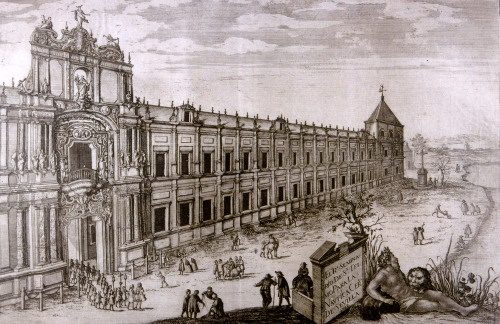
Among its Churrigueresque sculptures and Baroque façades, you can still see representations of subjects once taught here—arithmetic, geography and astronomy—and Saint Telmo, patron saint of seafarers, watching from above.
A city sculpted with mistakes
In a way, Montañés holding an image he never sculpted captures Seville perfectly: a city mixing history with legend, scholarship with folklore, and truth with theatricality. If it takes a fallen head to uncover the story, then the fall has served a purpose.
Because in Seville, even mistakes have a certain magic.
Join our Facebook channel and we will let you know when the next stories appear.
Seville in Two Days: Walking Itinerary and Map

Seville’s Royal Alcázar: History, Architecture and Legends
Churches to Visit in Seville

The General Archive of the Indies: Seville’s Historical Treasure
A Virtual Walk Around Seville Cathedral

Santa Cruz’s Most Beautiful Streets in Seville: Walking Route and Map
